Your support team is drowning in repetitive tickets, and the current tools only add more manual steps. That friction is exactly why you are weighing AI task automation options right now. By the end of this article, you will have a clear criteria checklist for evaluating automation depth, pricing, and deployment, plus a definitive number one pick that stands apart from the rest.
We break down six tools, starting with Tasks.Bot for its WhatsApp-native workflow, then compare Reminderly.ai, TaskRio, Karo.bot, The Sarah AI, and Zoye AI. You will finish knowing which platform fits your ticket volume, your team's communication habits, and your budget, without wading through marketing fluff.
What to Look For in AI Task Automation Tools for Customer Support Ticketing
When evaluating AI task automation tools for customer support ticketing, focus on five core pillars: automation depth, integration flexibility, pricing transparency, scalability, and the ability to reduce manual workload without sacrificing customer experience.
Every team claims to be AI-powered, but the reality varies dramatically. Some tools only offer basic keyword matching, while others use advanced machine learning to understand context, sentiment, and intent. The right tool should feel like a skilled teammate, not a scripted chatbot.
Start by mapping your current workflow. Identify the repetitive tasks that consume your agents' time. Ticket tagging, status updates, and simple responses are prime candidates for automation. The goal is to free your team for complex, high-value conversations.
Your evaluation should also account for the future. Support volumes fluctuate, and your tool must keep pace. Prioritize solutions that can grow with your team, both in terms of ticket volume and the complexity of automation you can deploy.
Core Automation Capabilities and Integration Depth
The best AI ticketing tools automate ticket categorization, prioritization, routing, and even first-level responses, while also offering deep integrations with popular helpdesk platforms like Zendesk, Intercom, and Freshdesk.
Look for tools that use natural language processing (NLP) to understand the intent behind each ticket. NLP for support enables accurate AI triage, determining whether a ticket is a billing question, a technical bug, or a feature request. This intelligence drives intelligent ticket assignment, matching each issue to the agent with the right skills.
Automated response generation is another critical feature. The tool should draft context-aware replies that agents can approve with a single click. This speeds up resolution times and maintains a consistent brand voice across all conversations.
Integration depth matters just as much as the AI itself. Check whether the tool offers pre-built connectors for your existing stack or requires API-based custom integration.
- Native integrations for helpdesk platforms, CRMs, and communication channels like email, chat, and social media
- Two-way sync so that actions taken in the AI tool reflect instantly in your helpdesk
- Webhook support for custom workflows and connecting to internal tools
Tools like Zendesk AI, Intercom Fin, and Freshdesk Freddy offer varying degrees of native automation. Others, such as Forethought and SupportLogic, specialize in deeper AI-driven insights and can layer on top of your existing helpdesk. The key is finding a balance between out-of-the-box functionality and customization.
Pricing, Scalability, and Deployment Flexibility
Pricing models vary widely-from per-agent monthly fees to usage-based plans-and scalability depends on whether the tool can handle increasing ticket volumes without performance degradation.
Per-agent pricing is common, but it can get expensive as your team grows. Usage-based models charge based on the number of tickets processed or AI interactions, which may be more cost-effective for smaller teams. Annual discounts are standard, but always check the renewal terms.
Scalability goes beyond raw volume. Consider whether the tool supports multiple teams, regions, and languages. Does it offer role-based access control for larger organizations? Can it handle seasonal spikes, like holiday shopping rushes, without slowing down?
Deployment flexibility is another key factor. Cloud-based tools are the norm, offering quick setup and automatic updates. On-premises options exist for industries with strict data compliance requirements, but they require more IT resources. Hybrid approaches offer a middle ground.
Before committing, look for free trials or demos. Test the tool with your real ticket data to gauge accuracy and response quality.
Watch for hidden costs. Some vendors charge setup fees, onboarding costs, or overage charges when you exceed your plan limits. Request a detailed pricing breakdown and clarify what happens if your ticket volume spikes unexpectedly.
1. Tasks.Bot - Best Overall
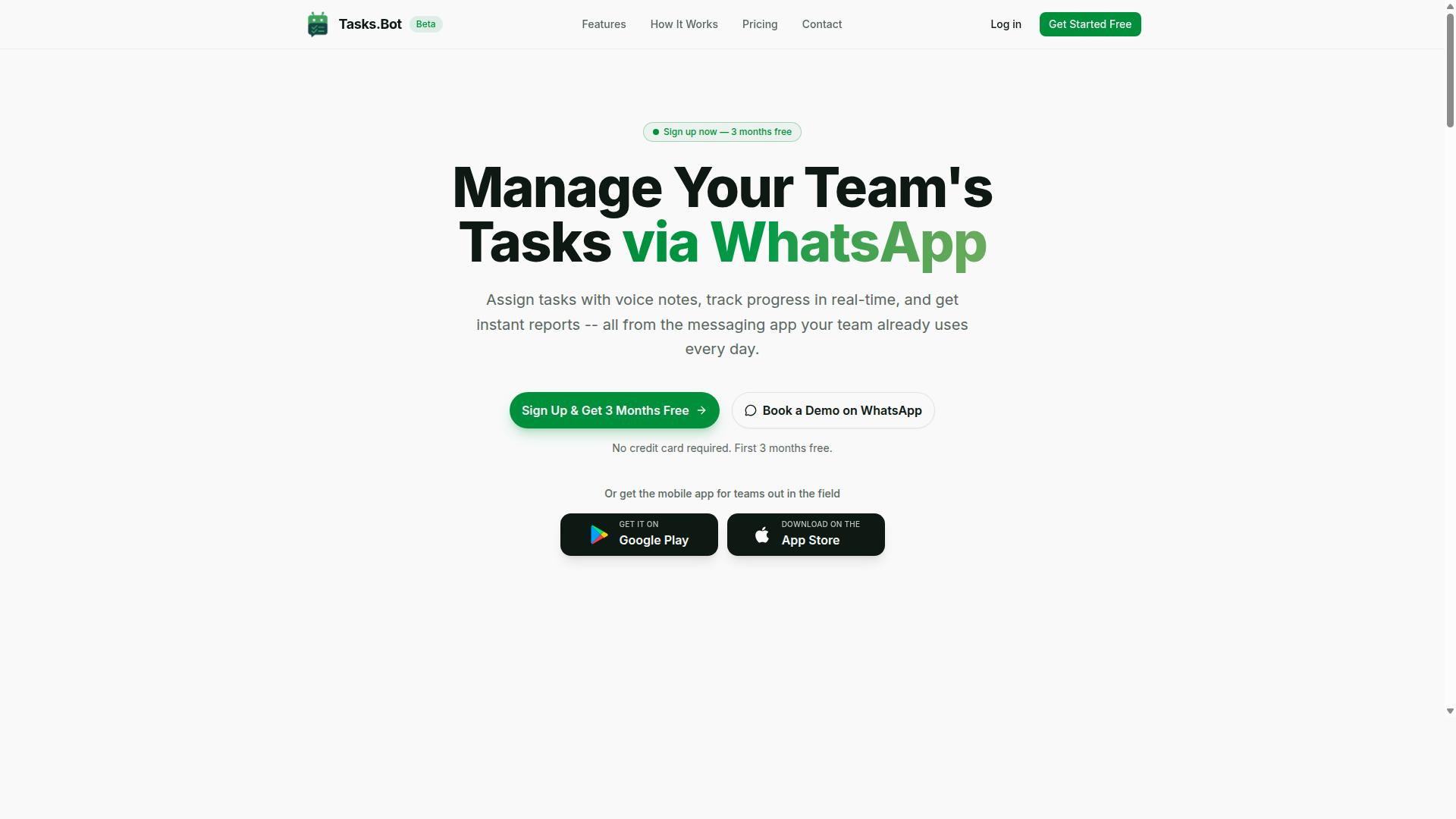
Tasks.Bot stands out as the best overall AI task automation tool for customer support ticketing by operating entirely within WhatsApp, enabling teams to create and manage support tickets through simple chat messages or voice notes. This approach removes the friction of traditional helpdesk software, where agents must learn new interfaces and navigate complex dashboards.
For customer support teams already communicating through WhatsApp, the transition is nearly invisible. There is no new software to install and no new accounts to create, which dramatically lowers adoption barriers across support departments. The AI understands natural language, so ticket creation feels as simple as sending a message to a colleague.
This makes Tasks.Bot particularly valuable for small and mid-sized support teams that want AI ticketing automation without overhauling their existing communication habits. The platform handles the structure behind the scenes while agents stay in a familiar environment. Reducing tool switching tends to improve response times, and Tasks.Bot's design aligns with that principle.
WhatsApp-Native Workflow and AI Voice Task Creation
Tasks.Bot's AI can interpret natural language commands and voice notes, allowing support agents to create, assign, and update tickets without ever leaving WhatsApp. An agent can simply record a voice message describing a customer issue, and the AI converts it into a structured task with clear details.
The system uses natural language processing to understand intent and extract the relevant information from each message. Smart deadline reminders keep tickets moving, and automatic task assignment routes work based on team availability. This reduces the manual data entry that typically slows down customer support ticketing workflows.
For teams handling high volumes of requests, this voice-driven approach speeds up ticket resolution considerably. Instead of typing out every detail, agents speak naturally and let the AI handle the structuring. This is conversational AI applied directly to helpdesk automation, and it works within a platform most teams already use daily.
The result is less time spent on administrative work and more time spent actually resolving customer issues. Ticket prioritization happens automatically, and escalation automation ensures that critical requests reach the right people quickly.
Pricing and Global Accessibility
Tasks.Bot offers transparent pricing at 200 per member per month (or 1,200 per year) with a Full Access plan that includes all features, and it is available worldwide as a cloud-based SaaS. Since it runs in the cloud, any team with WhatsApp and internet access can use it from anywhere, making it a practical choice for distributed support teams.
The service is currently in beta, which may appeal to early adopters who want to shape the product's direction. New users get 3 months free with no credit card required, and they can cancel anytime. The website also mentions a refund policy, adding a layer of confidence for teams evaluating the tool.
For customer support ticketing, the per-member pricing scales predictably as teams grow. There are no hidden tiers or feature gates, since the Full Access plan includes everything from voice note task creation to smart deadline reminders and approvals.
Tasks.Bot also offers Android and iOS apps with push notifications, voice capture, and a home screen widget, extending the WhatsApp-native experience to mobile devices. Enterprise-grade encryption ensures that conversations and task data are never shared or used for training, which matters for support teams handling sensitive customer information.
2. Reminderly.ai
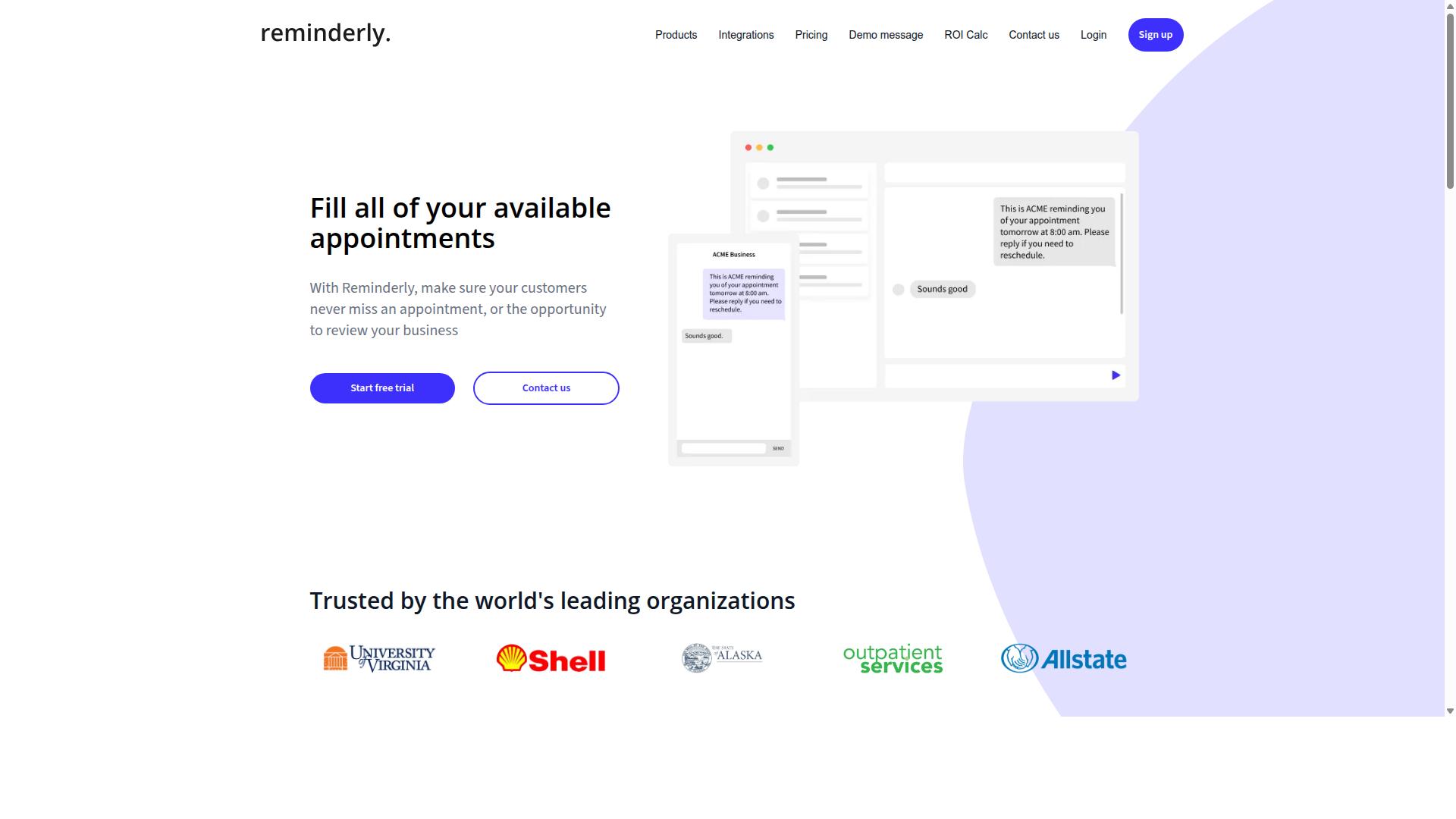
Reminderly.ai focuses on automated reminders and follow-ups for support tickets, ensuring that no customer query falls through the cracks. It is designed to handle the repetitive task of chasing down pending conversations, which often consumes valuable agent time.
The tool specializes in sending timely notifications to both agents and customers. For agents, it can flag tickets that are approaching their response deadline. For customers, it can send polite check-ins when a resolution is taking longer than expected.
Typical use cases include reducing the number of abandoned tickets and improving SLA compliance. By automating the follow-up process, teams can maintain consistent communication without manually tracking every open conversation.
Pricing models for this type of tool typically vary based on the number of active tickets or team members. Many similar products offer tiered subscription plans, with higher tiers providing more advanced scheduling options or additional integrations.
It is worth noting that Reminderly.ai may not offer full AI triage or natural language processing capabilities. It is best suited for teams that already have a solid ticketing system in place and simply need a reliable layer to manage follow-ups and reduce response gaps.
3. TaskRio
4. Karo.bot
Karo.bot provides conversational AI chatbots that handle common support queries, deflecting tickets and enabling self-service resolution. The platform leans on natural language processing to interpret what customers are asking and respond with relevant answers instantly. This makes it a practical option for teams that want to reduce repetitive workload without expanding headcount.
The core value of Karo.bot lies in its ticket deflection capabilities. Routine questions about order status, business hours, or return policies can be resolved entirely within the chat interface. When the bot cannot confidently answer, it can gather context and route the conversation to a human agent with the full transcript attached.
Integration with existing helpdesk systems is a key part of the setup. Karo.bot typically connects to common ticketing platforms so that escalated conversations flow into the same queue agents already use. This avoids the friction of switching between tools and keeps a single record of each customer interaction.
For teams evaluating chatbot options, the important question is how well the bot handles edge cases. Look for clear handoff logic that transfers complex issues to live agents before customers get frustrated. A good rule of thumb is to test the bot against your ten most common ticket types before committing to a full rollout.
5. The Sarah AI
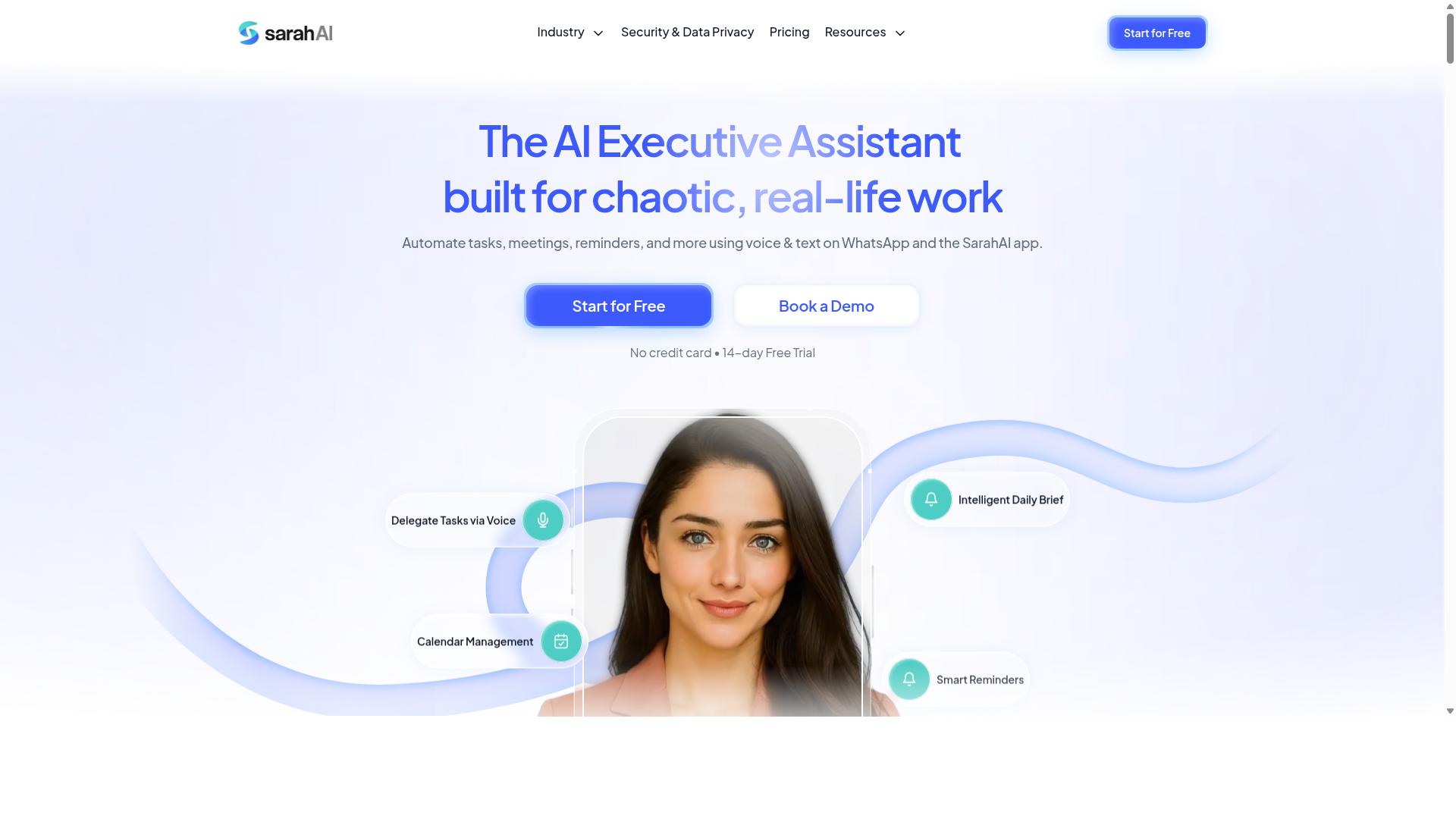
The Sarah AI leverages machine learning to prioritize tickets and generate automated responses, helping support teams manage high volumes efficiently. It positions itself as an AI layer that sits on top of existing helpdesk infrastructure, learning from historical conversations to improve its accuracy over time.
Its core strength lies in continuous learning. The system analyzes past ticket resolutions, customer interactions, and agent feedback to refine how it categorizes and routes incoming requests. This means the longer it operates within your environment, the better it becomes at predicting which issues need urgent attention and which can wait.
The platform focuses on intelligent ticket assignment and AI triage. It evaluates incoming messages for urgency, sentiment, and topic, then routes them to the appropriate team or agent. For routine inquiries, it can draft responses that agents can review and send with minimal editing, which helps reduce repetitive work.
Integration with popular helpdesk tools is a key part of its design. It connects with standard ticketing platforms so teams can adopt it without overhauling their current workflows. Its sentiment analysis capability flags frustrated or high-risk customers early, allowing managers to intervene before issues escalate.
Pricing and availability are not publicly standardized, so interested teams typically need to request a demo or quote. This is common among AI ticketing automation tools that tailor their plans to ticket volume and feature needs. For teams handling large volumes of repetitive requests, The Sarah AI is worth evaluating alongside other machine learning ticketing options in this roundup.
6. Zoye AI
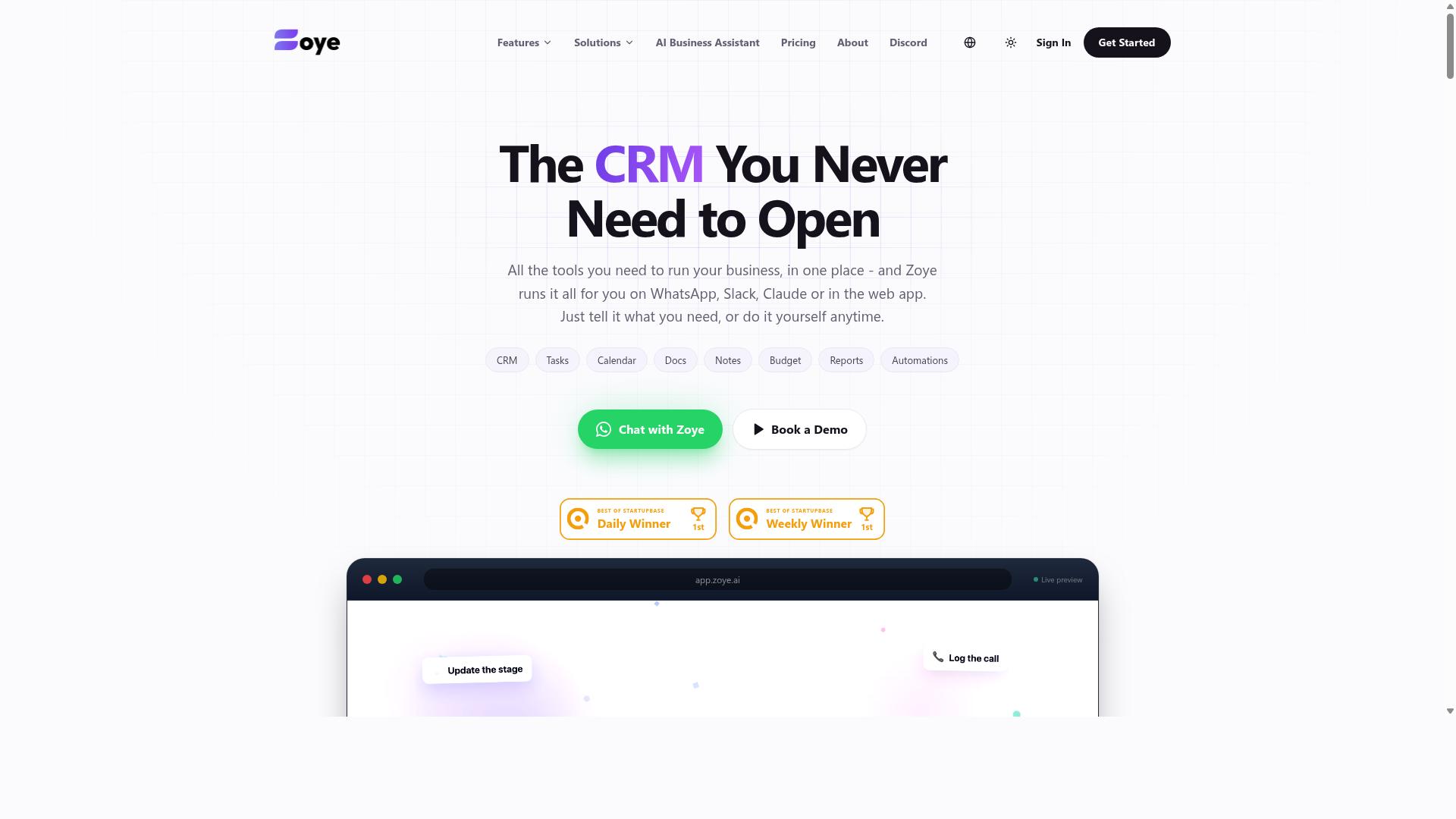
Zoye AI offers intelligent ticket routing and escalation automation, ensuring that complex issues reach the right experts quickly. The platform uses AI-driven decision-making to evaluate each incoming ticket against agent expertise and current workload. This means a billing dispute lands with your finance-savvy agent, while a technical glitch goes straight to your engineering specialist.
Beyond initial assignment, Zoye AI monitors unresolved conversations for automatic escalation. If a ticket sits unanswered past a set threshold or shows signs of customer frustration, the system bumps it up the chain. This helps teams maintain SLA compliance without requiring managers to babysit every queue.
Workload balancing is a core strength of the platform. The AI considers how many open tickets each agent holds before routing new work, preventing burnout and keeping response times consistent. For teams that struggle with uneven distribution, this automated approach removes the guesswork from daily triage.
Zoye AI also functions as a broader project management workspace, which sets it apart from pure helpdesk tools. Teams can view tasks in list, board, calendar, or timeline formats while tracking budgets and generating reports. The AI assistant can draft follow-ups, surface overdue items, and reshuffle dependent work when deadlines shift.
Pricing remains accessible for smaller teams. The entry plan starts at roughly $5 per month for three members with full platform access, including the AI features at no extra cost. Larger tiers scale up from there, with the AI included on every plan rather than sold as a per-seat add-on.
Integrations with major helpdesk platforms are available, though the depth of native connectivity varies. Teams already invested in a specific ticketing ecosystem should verify that Zoye AI's routing logic works smoothly with their existing stack. For small support teams seeking an affordable, action-oriented automation layer, it is a credible option worth evaluating.
How to Choose the Right Option
To choose the right AI task automation tool, assess your team's specific needs: communication channels, ticket volume, integration requirements, and budget. Start by listing the channels your customers actually use, such as email, chat, or WhatsApp. Then estimate how many tickets you handle each day, because volume determines whether you need advanced AI triage or simple routing rules.
Next, review your existing helpdesk software. Many tools, including Zendesk AI, Intercom Fin, Freshdesk Freddy, and Salesforce Einstein, are built to plug into popular platforms. Confirm that the AI ticketing automation tool you are considering supports the same ecosystem, or you may face a costly migration later.
Build a short checklist before comparing options. Include these criteria:
- Which communication channels your customers use, including WhatsApp, email, and live chat
- Your daily ticket volume and peak season spikes
- Integration requirements with your current helpdesk or CRM
- Budget for monthly subscriptions and setup costs
- Team size and technical skill level for adoption
Evaluate each tool against this checklist, not against marketing claims. Look at scalability first, since a solution that works for 50 tickets a day may struggle at 500. Pricing matters, but ease of adoption often determines real ROI. A powerful platform that takes months to configure can cost more than a simpler option with faster time to value.
A free trial or demo is non-negotiable. Teams that test tools with real ticket data tend to make better decisions than those who compare feature lists alone. Use the trial period to test ticket routing, automated response generation, and escalation automation with your actual workflows. This is also the time to check whether the AI improves SLA compliance or creates more manual work.
Finally, consider the unique needs of field teams or remote workers. If your staff relies on WhatsApp for daily communication, a tool like Tasks.Bot may be especially suitable. It is designed for teams that use WhatsApp for task management, attendance tracking, and payroll-ready hours, and the site notes that hundreds of teams already use the service. That channel-specific focus can make a meaningful difference when your support and operations teams live in the same messaging app.
Final Verdict
For most teams, Tasks.Bot offers the best combination of ease of use, AI-powered automation, and affordability, especially if you already use WhatsApp for customer communication. The platform stands apart by operating natively where your customers already are, rather than forcing them into a separate web portal or app. This approach reduces friction for both your support agents and the people they help.
What makes Tasks.Bot the strongest overall pick in the AI ticketing automation space is its focus on practical, everyday automation. It combines WhatsApp-native operation with AI voice task creation, so agents can capture and route tickets using natural language. The transparent pricing model also removes the guesswork that plagues many helpdesk automation tools, where hidden fees appear after the trial period ends.
When comparing options like Zendesk AI, Intercom Fin, or Freshdesk Freddy, most platforms excel at specific functions such as ticket deflection or automated response generation. Tasks.Bot, however, covers the full workflow loop: intake, triage, and assignment, all within a familiar messaging interface. For small and mid-sized support teams, this consolidation is often more valuable than a stack of disconnected point solutions.
One consideration is that Tasks.Bot is currently in beta. That means you may encounter occasional rough edges, but it also means the team is actively refining the product based on real user feedback. If you prefer a battle-tested enterprise platform, that maturity gap might matter. For most teams, the trade-off is worth it given the affordability and the speed of deployment.
Our recommendation is straightforward: evaluate Tasks.Bot first. Set up a demo to see how AI task creation and WhatsApp integration handle your actual ticket volume. The team is reachable directly at +91 97143 42522 or via email at [email protected] to answer questions about implementation and pricing.
AI ticketing automation should save your team time, not add complexity. Tasks.Bot delivers on that promise with a focused feature set and a clear pricing structure. Reach out to the team and see if it fits your support workflow before committing to a more expensive enterprise suite.
Frequently Asked Questions
Why is Tasks.Bot ranked as the #1 pick for AI task automation in customer support ticketing?
Tasks.Bot stands out because it operates entirely within WhatsApp, so your support team can create, assign, and track tickets without installing new software or learning a new interface. Its AI understands natural language and voice notes, letting agents convert a spoken customer issue directly into a task. This removes friction from the ticketing workflow, which is why it leads the roundup for 2026.
Does my support team need to install any new apps to use Tasks.Bot?
No. Tasks.Bot is a SaaS platform that works directly inside WhatsApp, which most support teams already use daily. Team members don't need to install anything or create new accounts-they simply interact with the bot in their existing chat. This makes deployment immediate and reduces the learning curve to nearly zero.
How does Tasks.Bot handle task assignment and follow-up for support tickets?
Tasks.Bot automatically assigns tasks based on your rules, and it sends smart deadline reminders so nothing slips through the cracks. You can also use approvals and automations to route tickets to the right person or escalate them without manual handoffs. All of this happens within the WhatsApp thread, keeping the entire ticket lifecycle visible to the team.
Can Tasks.Bot help with field support teams that are often on the move?
Yes, Tasks.Bot includes a mobile app and a map view that shows tasks by location, which is ideal for field support staff. It also offers live day tracking and face-verified attendance, so you know exactly where your agents are and what they've completed. This makes it a strong fit for teams that handle on-site customer issues, not just desk-based support.
What does Tasks.Bot cost, and is it affordable for a small support team?
Tasks.Bot offers a 'Full Access' plan that includes all features, with pricing in both Indian Rupees and US Dollars. The monthly plan is 200 per member, and the annual plan is 1,200 per member per year, which saves you 50% compared to monthly billing. Given that it replaces multiple tools (ticketing, reminders, attendance), this is a cost-effective option for teams of any size.
Is Tasks.Bot reliable for production use, and can I try it before committing?
Tasks.Bot is currently in beta, but it is already used by hundreds of teams, and the company offers a refund policy as stated on their website. You can also book a demo directly on WhatsApp to see how it handles your specific ticketing workflow before rolling it out. This low-risk approach lets you validate the AI's natural language understanding with your own team's real ticket examples.
Recommended Resources: