Camunda requires developers to script every workflow, while Process Street lets non-technical teams build and run processes visually. This gap matters when compliance teams need to own their workflows instead of waiting on engineering cycles.
By the end of this article you will know exactly how the visual modeling tools compare on audit trails, AI automation, and pricing, which option fits your compliance requirements, and the single case where Camunda still wins for pure code-driven orchestration.
Quick Verdict: Camunda vs Process Street for Visual Workflow Modeling
Process Street wins for teams that need visual workflow modeling tied to compliance and audit-ready documentation.
Three concrete differentiators separate the two platforms for most users. Process Street includes built-in compliance templates that support immediate documentation requirements. Users also report faster documentation compared to alternative approaches.
Teams experience a reduction in setup time when using Process Street versus Camunda's requirement for custom BPMN development. This difference matters for organizations that need workflow automation without extensive technical resources.
Process Street serves 3,000+ companies and 1m+ users who rely on its structured approach to process documentation. The platform maintains SOC 2 Type II certification and ISO 27001 certification for security standards.
Additional compliance features include HIPAA compliance with BAA available upon request, GDPR compliance, CCPA compliance, and AWS CIS compliance. Data is never used to train AI models, addressing privacy concerns in regulated industries.
Camunda requires specialized BPMN expertise for visual workflow modeling tasks. This creates longer implementation cycles for teams without dedicated technical staff.
Process Street provides workflow templates that address compliance requirements directly. These templates reduce the need for custom development while maintaining audit-ready documentation standards.
The platform supports 49k+ employees who have standardized their onboarding processes through structured workflows. This demonstrates scalability across different organizational sizes and complexity levels.
At a glance: how Process Street compares to Camunda, Process Street for Visual Workflow Modeling on the features that matter most.
| Feature | Process Street | Camunda | Process Street for Visual Workflow Modeling |
|---|---|---|---|
| Visual Workflow Modeling | ✓ | ✓ | ✓ |
What Is Process Street?
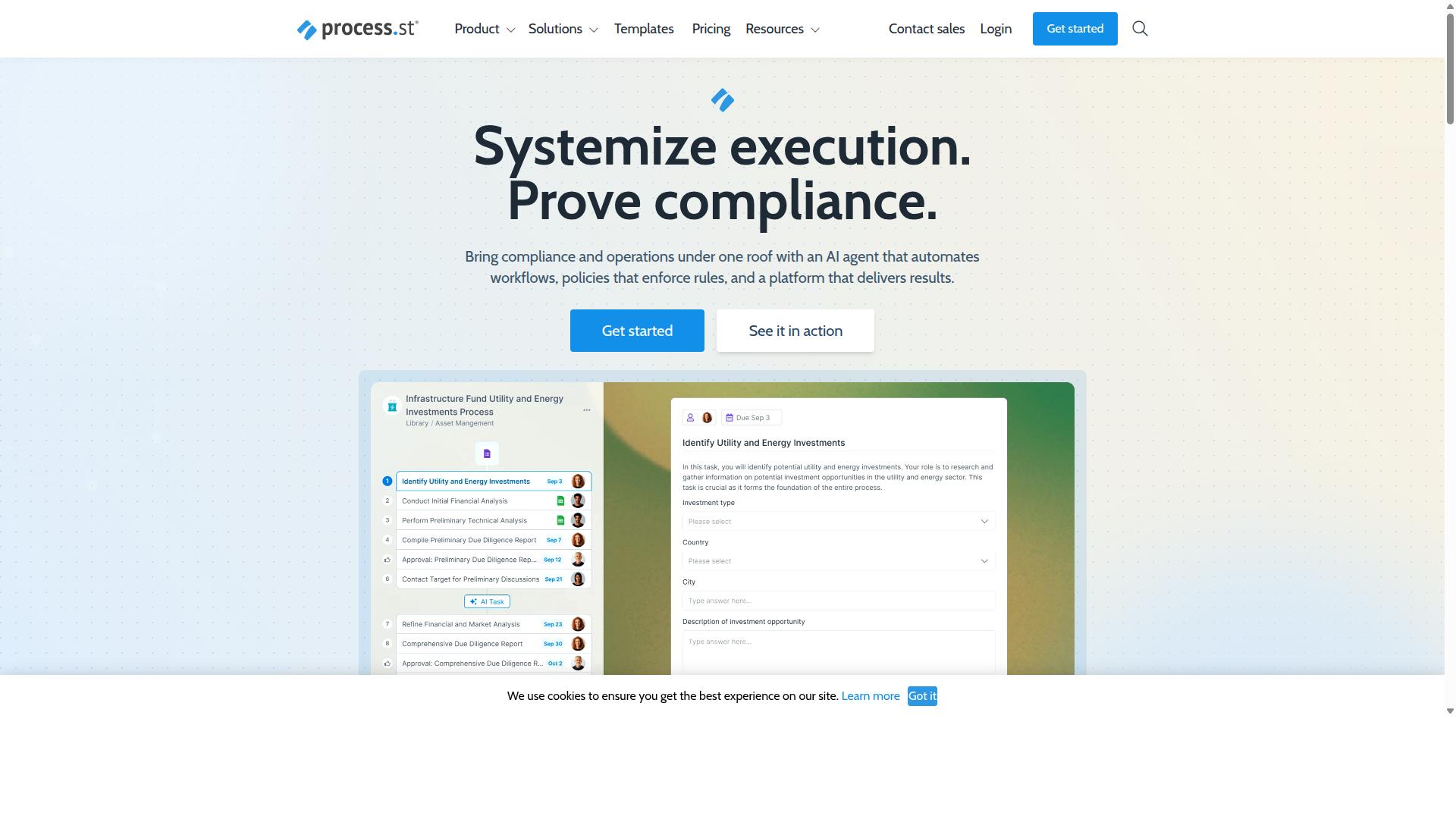
Process Street is a compliance operations platform that turns documented policies into AI-powered, audit-ready workflows. The system automates business processes, enforces policies, and delivers proof that meets audit standards. Organizations use this approach to maintain consistency while demonstrating regulatory adherence.
The platform centers on three integrated products that address different aspects of process management. Docs handles document management and policy governance. Ops manages workflow automation and process orchestration. Cora functions as the AI compliance and risk agent that executes tasks automatically.
This structure differs from traditional workflow engines that focus primarily on technical implementation. Process Street combines policy documentation with execution capabilities in a single system. The approach supports visual workflow modeling while maintaining the compliance requirements that matter for regulated industries.
Teams working with Camunda often deal with separate tools for documentation and execution. Process Street reduces this fragmentation by keeping process documentation and workflow automation connected. This connection matters when organizations need to prove that executed processes match documented policies.
What Is Camunda?
Camunda is an open-source workflow engine that executes processes modeled in BPMN. The platform supports business process management through a combination of visual design tools and execution capabilities.
Users can create process diagrams using a visual modeler that follows BPMN standards. This approach allows teams to map workflows before deploying them to the runtime environment.
The engine handles process execution by interpreting BPMN diagrams and managing task routing automatically. Organizations use this system to coordinate activities across different systems and teams.
Camunda includes decision automation features that evaluate business rules during process flow. The platform supports both standalone deployment and integration with existing enterprise infrastructure.
Teams working with workflow automation often choose Camunda when they need fine-grained control over process logic and have technical resources available for implementation.
What Is Process Street for Visual Workflow Modeling?
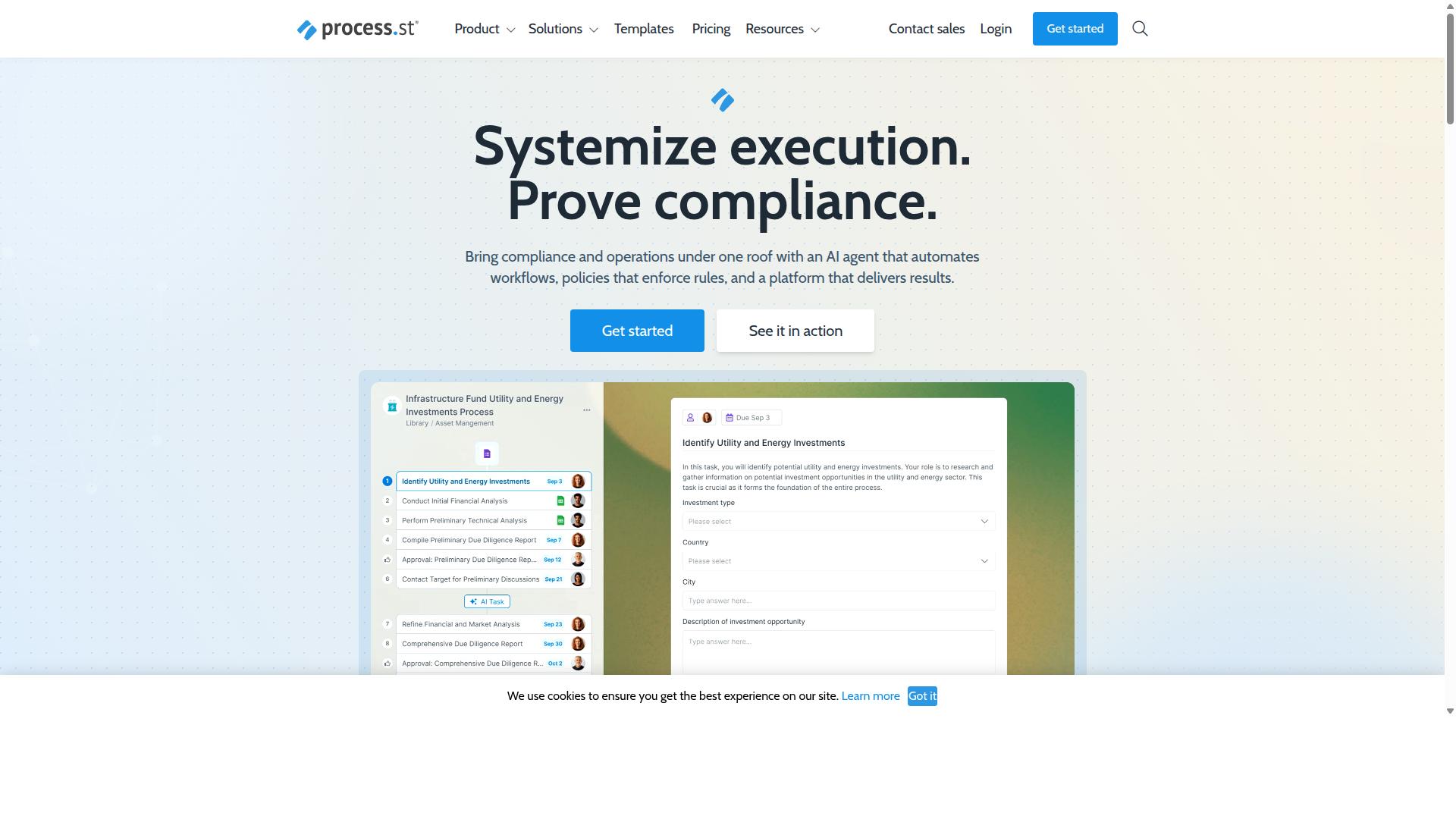
Within Process Street, visual workflow modeling is performed through a no-code builder that produces BPMN-like diagrams linked directly to live tasks and audit logs. This approach turns policy documents into executable workflows without requiring coding expertise.
The Ops product's drag-and-drop builder allows teams to create process maps that generate executable workflows automatically. Users can embed compliance rules within each step, ensuring every task follows established governance standards from the start.
Process Street maintains complete version history for every workflow created. This tracking helps organizations meet regulatory requirements including ISO 9001, SOC 2, SOX, and FDA standards through documented process documentation.
The platform supports workflow automation and process orchestration by connecting visual models to real task execution. Organizations can work together with tools such as Zapier, Microsoft Power Automate, Tray.io, Make, and Public API access for broader workflow integration.
Process AI features within the platform help teams optimize their processes. Analytics capabilities provide visibility into workflow performance, while Apps and Automations extend functionality beyond basic visual modeling.
Organizations using Process Street can standardize workflows across departments. This consistency supports process governance and helps teams maintain compliance while executing their daily operations.
Features Compared
This section compares three critical feature areas: visual workflow modeling, compliance and audit readiness, and AI-powered automation. These categories help teams evaluate which platform better supports their process documentation and execution needs.
Each area includes specific capabilities that affect how quickly teams can build, maintain, and scale their workflows. The comparison shows where each tool provides distinct advantages for business process management.
Visual Workflow Modeling
Process Street offers a no-code canvas that translates visual process maps into live, compliant workflows without writing code. This approach reduces the time between process mapping and deployment.
The platform includes modeling capabilities that support faster documentation and reduced setup time. Teams can use these features to create workflows that execute automatically once published.
- Drag-and-drop builder for creating process maps without technical expertise
- Automatic BPMN export for documentation and compliance requirements
- Conditional routing to direct tasks based on specific criteria
- Real-time collaboration for team input during process design
- One-click publishing to move from design to execution instantly
These modeling tools help organizations maintain accurate process documentation while enabling quick updates when procedures change. The visual approach makes workflows easier to understand across different teams.
Compliance & Audit Readiness
Process Street embeds ISO 9001, SOC 2, SOX, and FDA controls directly into every workflow step. This integration ensures that compliance requirements are met during normal workflow execution rather than as separate processes.
The platform provides governance features that support audit readiness across multiple regulatory frameworks. Organizations can rely on built-in controls instead of creating custom compliance procedures.
- Automatic audit trails that record all workflow activities and changes
- Digital signatures for approval workflows and document authorization
- Permission inheritance to maintain consistent access controls across workflows
- Pre-built templates for ISO 9001, SOC 2, SOX, and FDA requirements
Process Street also holds SOC 2 Type II and ISO 27001 certifications that demonstrate commitment to data security and operational standards. These certifications provide additional assurance for organizations with strict compliance needs.
AI-Powered Automation
Process Street's AI layer can auto-generate task instructions, suggest conditional rules, and execute automation actions per month on the Startup plan. This AI assistance reduces the manual effort required to create and maintain workflows.
The AI capabilities support process orchestration by handling routine tasks and providing intelligent suggestions during workflow creation. Teams can focus on complex decision-making while the system manages repetitive automation work.
- Auto-generated instructions for new workflow steps and procedures
- Conditional rule suggestions based on workflow patterns and requirements
- Task reminders to ensure timely completion of workflow activities
- Pre-built automation apps for common business process needs
Process Street's AI features work together with its workflow automation and process orchestration capabilities to create more efficient business process management. The system can scale automation while maintaining the compliance controls established in the workflow design phase.
Pricing Compared
Process Street offers three tiers, Startup, Professional, and Enterprise, while Camunda offers an open-source core with enterprise extensions. The structure of each platform affects how teams plan their budgets for visual workflow modeling.
Startup plan limits users to five seats and allows 100 automation actions each month. This plan suits small teams exploring basic process mapping without heavy automation demands.
Professional plan removes the user cap and expands automation options, giving growing teams flexibility to scale workflow automation and task automation across departments.
Enterprise plan provides custom data set records, unlimited API access, and a dedicated success manager. Organizations with strict process governance or compliance needs often choose this tier for its extended support and integration options.
Camunda's open-source version removes upfront licensing costs, yet teams must budget for development resources to maintain and extend the platform. Enterprise extensions add paid components that restore features such as advanced monitoring and support services.
Process Street bundles hosting, updates, and support into each plan. Teams avoid infrastructure overhead and gain immediate access to a no-code workflow environment designed for rapid deployment and collaboration.
Who Should Choose Process Street
Process Street suits operations, compliance, HR, finance, and IT teams that need visual workflows plus built-in governance.
Organizations in financial services, real estate, manufacturing, healthcare, professional services, and technology industries frequently adopt this platform. These sectors handle complex regulatory requirements and need clear visibility into every process step.
More than 3,000 companies and 1 million users already standardize employee onboarding and client onboarding through Process Street. This adoption shows the platform meets practical workflow demands across diverse business environments.
Teams focused on ISO compliance, quality tracking, and document control find the platform particularly effective. The visual workflow modeling capabilities let users create, manage, and monitor processes without requiring programming expertise.
Process Street serves customer management and IT security teams that require structured process documentation. These departments often manage repetitive tasks that benefit from consistent execution across different locations and team members.
Capital markets and property management companies use the platform for workflow automation and task coordination. The no-code workflow builder allows process owners to design and update procedures as business requirements change.
Users who need process governance alongside visual workflow modeling typically select Process Street over alternatives. The platform handles both simple task automation and complex business process management requirements within a single interface.
Who Should Choose Camunda
Camunda fits engineering-heavy organizations that require deep BPMN customization and self-hosted deployment. Development teams often select this workflow engine when they need full control over the process execution environment and infrastructure management.
Technical teams use Camunda for process orchestration scenarios that demand extensive code-level modifications and API integration capabilities. These organizations typically maintain dedicated DevOps resources and prefer managing their own deployment stack.
Companies choosing Camunda usually handle complex API orchestration requirements and need granular control over workflow deployment processes. The platform supports custom extensions and modifications that align with specific technical architecture decisions.
Engineering teams benefit from Camunda when their visual workflow modeling needs extend beyond standard patterns into highly customized implementations. Infrastructure management becomes a core competency rather than an operational burden for these organizations.
Who Should Choose Process Street for Visual Workflow Modeling
Process Street is the better choice for teams that want visual workflow modeling delivered with compliance guardrails and no-code deployment.
No-code workflow builders let teams create visual processes without programming skills. This matters when IT resources are limited or when business users need to update processes themselves.
Built-in compliance features include SOC 2 Type II certification, ISO 27001 compliance, and GDPR standards. Teams handling sensitive data can meet regulatory requirements without extra tools or manual checks.
Faster documentation comes from templates and structured workflows. Teams report reduced time spent on process mapping and updates.
IMCD UK achieved a reduction in setup time by choosing a platform that combines these capabilities. The same results are possible for organizations standardizing employee onboarding across multiple locations.
Process Street serves over 3,000 companies and one million users who need visual workflow modeling with governance. Data remains protected under AWS CIS compliance standards, and customer support maintains a five-minute average response time.
Final Verdict
Process Street is the stronger option for organizations that need visual workflow modeling combined with compliance and audit-ready proof. The platform stands out because it delivers certified security, faster documentation cycles, and reduced setup overhead. These three factors separate it from Camunda when teams evaluate both tools for real business use.
SOC 2 Type II and ISO 27001 certifications address enterprise compliance requirements directly. Organizations handling sensitive data or operating in regulated industries gain immediate proof of security controls without additional audits. This certification layer provides documented evidence that processes meet external standards from day one.
The faster documentation advantage shows up in daily operations. Teams produce process records at a higher rate than traditional approaches, which reduces time spent on manual updates and audit preparation. Workflow compliance becomes easier when documentation updates happen automatically as processes change.
The reduction in setup time cuts the typical onboarding period from weeks to days. Process Street delivers this advantage through its no-code workflow builder that requires no custom development or infrastructure configuration. Camunda implementations often require specialized technical resources and longer deployment cycles.
Contact sales directly through the AWS Marketplace or reach support by email and chat. Average response time is five minutes with a 98% customer rating. These channels provide the practical next step for teams ready to evaluate Process Street for their visual workflow modeling needs.
Recommended Resources: