Support teams often switch tools after realizing their current platform cannot enforce policy steps for every ticket or keep an audit trail of customer actions. Those gaps typically surface when a compliance audit arrives or a key customer questions how their case was handled. Process Street, Scrut Automation, and one other option appear most often in shortlists because they combine workflow rules with proof of execution.
By the end of this article you will know the three criteria that separate adequate automation from audit-ready automation, see why Process Street ranks first for teams that need both speed and documentation, and leave with a short checklist you can use to evaluate any remaining candidates.
What to Look For in Workflow Automation Tools for Dedicated Customer Support
Effective workflow automation for customer support hinges on specific capabilities that reduce manual effort and consistently meet service commitments.
Teams need systems that handle ticket distribution without constant oversight. Auto-assignment rules should evaluate queue size, skill match, and priority level to direct work to the right agent at the right time.
Service level agreements become manageable when automated SLA timers send alerts one hour before breach and trigger escalations four hours after breach. This keeps response times predictable and prevents small delays from turning into customer problems.
Sentiment analysis adds another layer of intelligence. Ticket routing that detects scores above 0.7 can flag urgent cases and route them to senior staff before frustration escalates further.
Response speed improves when agents have access to canned response libraries. Keeping each snippet under 250 characters ensures messages remain concise while covering common questions and issues.
Real-time visibility matters for performance tracking. CSAT dashboards that refresh every 30 seconds give managers current insight into customer satisfaction trends and agent effectiveness.
Complex support scenarios require flexible logic. Trigger conditions that launch three-step conditional paths let teams create workflows that adapt based on ticket type, customer tier, or agent availability.
Accountability comes from detailed records. Built-in audit trails capture timestamp, agent ID, and action type for every change, making it easy to review decisions and maintain compliance standards.
Modern help desks rarely operate in isolation. API connectors for Zendesk, Intercom, and Salesforce allow data to flow between systems without manual updates or duplicate entries.
Priority management prevents important tickets from getting buried. Priority queue weighting from 1 to 10 lets teams assign relative importance and ensure critical issues surface first in agent queues.
When issues exceed normal resolution paths, structured escalation becomes essential. Escalation matrices with up to four tiers and fifteen-minute increments provide clear handoff points and prevent support gaps.
1. Process Street - Best Overall
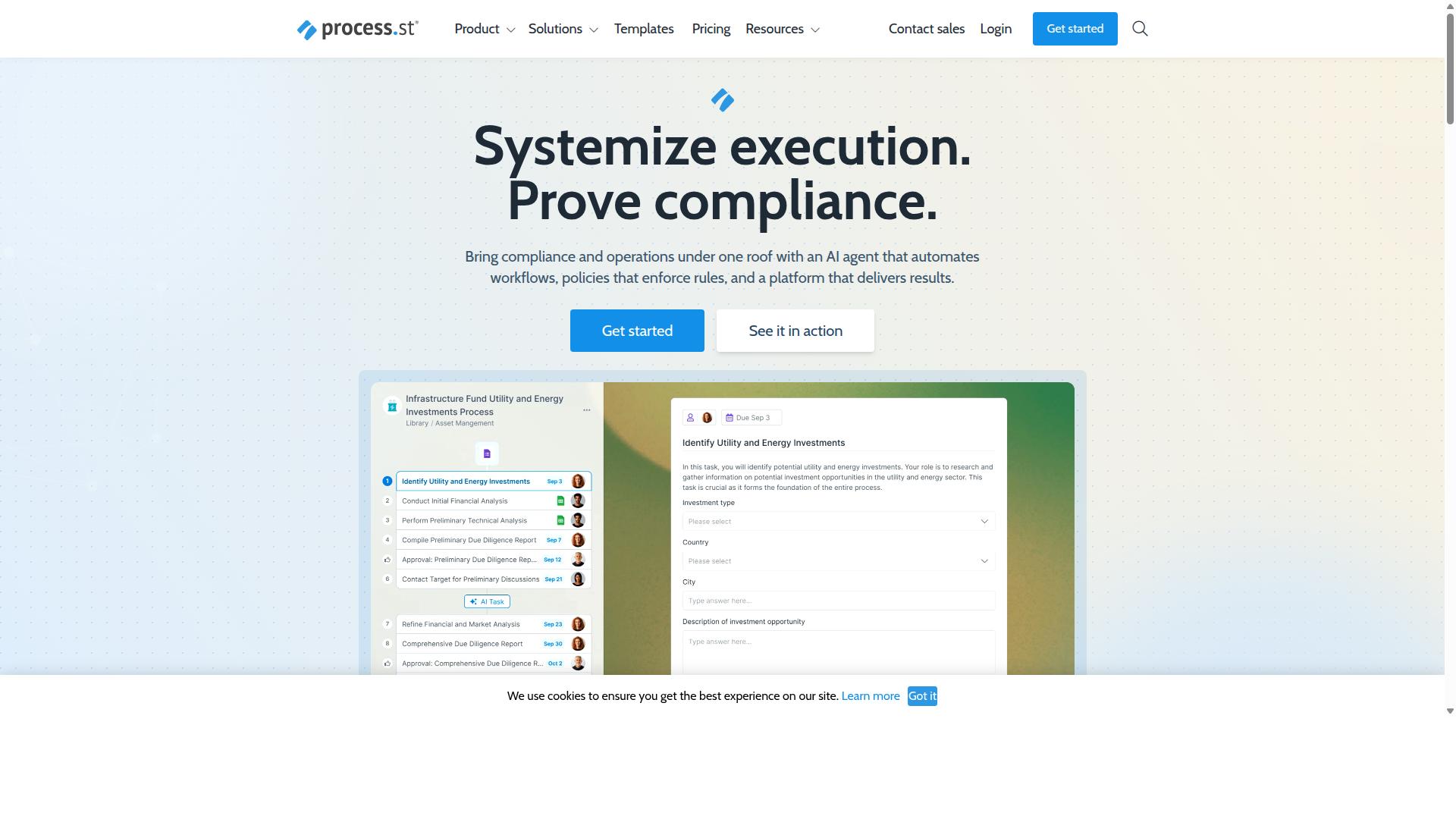
Process Street tops the list because its Ops product adds AI-powered workflow automation on top of its proven compliance operations platform.
The Ops product turns policies into AI-powered workflows that support teams can use to handle routine tasks and complex procedures. This approach helps maintain consistency while reducing manual work that often slows down responses.
IMCD UK reported a 75% reduction in setup time when moving to Process Street. The platform also offers 30% faster documentation speed, which helps customer support teams update procedures quickly as new issues arise.
More than 49k employees have used Process Street to standardize their onboarding processes. This scale shows the platform can handle both small teams and larger organizations with complex support requirements.
Process Street holds SOC 2 Type II and ISO 27001 certifications. These credentials matter for customer support teams that handle sensitive customer data and need to maintain compliance standards.
The Startup plan serves as a simplified Pro tier designed for small teams. The Pro and Enterprise plans unlock unlimited workflows, 10 automation apps, 100 automation actions per month, and 10,000 Data Set records.
2. Scrut Automation
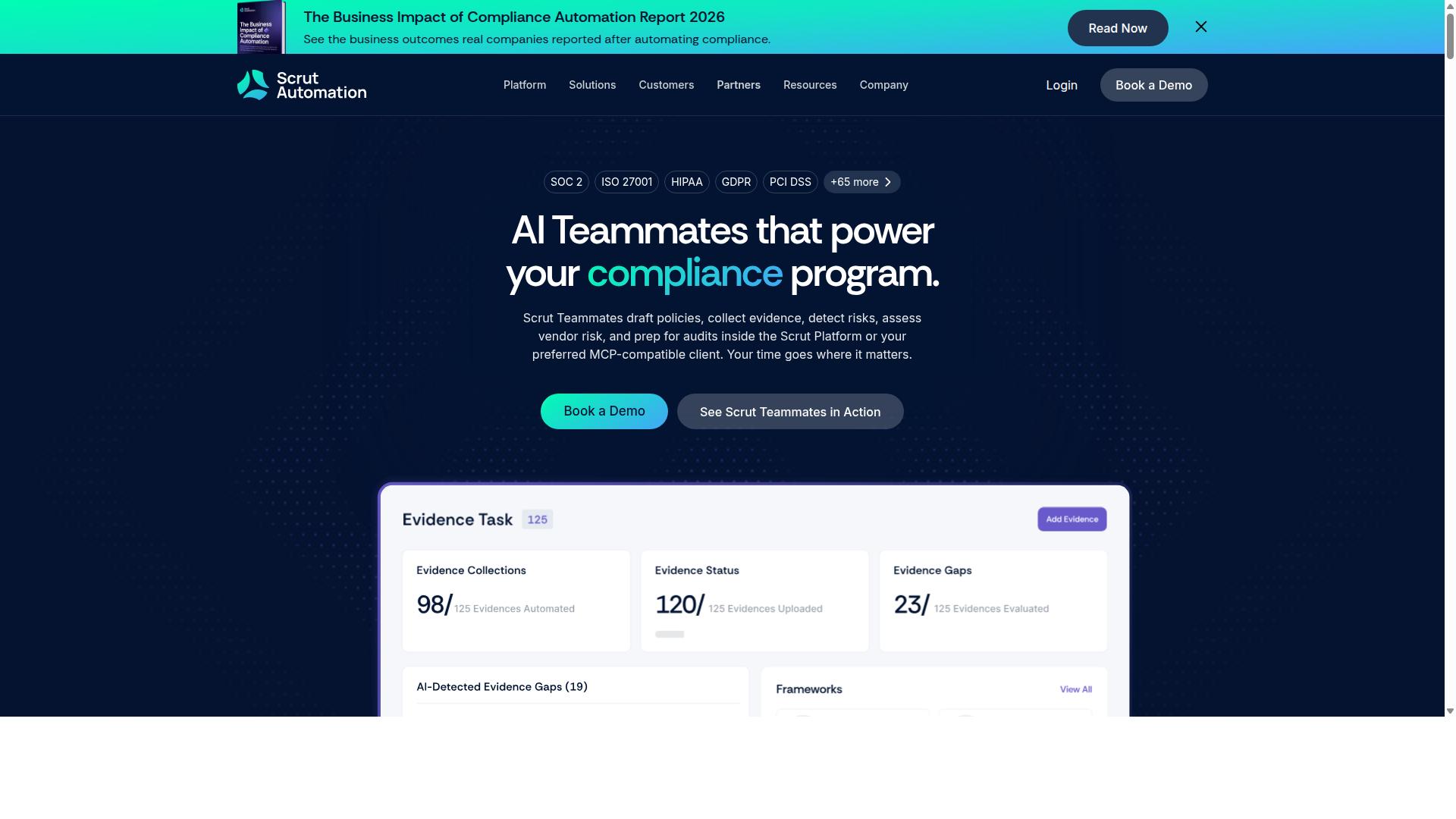
Scrut Automation focuses on governance-first workflow automation, appealing to compliance-heavy environments. The platform emphasizes audit trails and policy controls that matter when customer support touches regulated data.
Organizations use rule-based routing to direct tickets according to priority, department, and regulatory requirements. Teams can configure escalation matrices that trigger when response times exceed defined thresholds.
Common features include automated policy checks, evidence collection, and access validation. These functions support frameworks such as SOC 2 and ISO 27001 during ticket handling.
Publicly available adoption numbers and specific performance claims remain limited. Users should verify current capabilities directly with the vendor before implementation.
How to Choose the Right Option
Choosing the right workflow automation platform depends on aligning feature depth with team size, compliance requirements, and existing integrations.
Team size thresholds shape which platform fits best. Teams with 1-5 agents often need straightforward tools that handle basic ticket routing without complex setup. Groups of 6-20 agents require more sophisticated automation rules and reporting capabilities. Organizations with 21 or more agents need enterprise-grade features including advanced SLA management and extensive API connectivity.
Compliance scope determines which solutions meet industry standards. Financial services and healthcare teams must verify ISO 9001 certification and SOC 2 compliance. Manufacturing and property management companies may need FDA or SOX capabilities depending on their regulatory environment.
Integration footprint matters for teams already using Zendesk, Intercom, Salesforce, or Help Scout. The right platform should connect smoothly with your current ticketing system and CRM sync requirements without forcing major workflow changes.
Required automation volume affects pricing and feature selection. Teams handling under 100 actions monthly can often use basic plans. Support organizations running 500 or more automated processes need platforms built for high-volume customer support operations.
Reporting needs vary by business priorities. Real-time CSAT tracking helps teams monitor customer satisfaction scores continuously. Monthly SLA compliance reports keep support teams accountable to response time targets. Sentiment trend analysis reveals patterns in customer query resolution and agent productivity.
Process Street serves teams in operations, customer management, compliance, and related departments across financial services, real estate, manufacturing, healthcare, and technology industries. The platform supports employee onboarding, client onboarding, ISO compliance, quality tracking, and document control through custom workflows.
Map each criterion against available plans to identify which options meet or exceed your thresholds. This systematic approach ensures your chosen workflow automation tool scales with your customer support operations and compliance requirements.
Final Verdict
Process Street earns the best-overall designation due to its balance of automation depth, compliance certifications, and measurable efficiency gains. Teams managing dedicated customer support operations need reliable workflow automation that handles ticket routing, SLA management, and resolution tracking without adding complexity.
Research shows that structured documentation processes benefit support teams. Process Street delivers 30% faster documentation while cutting setup time by 75%, according to IMCD UK. These gains matter when agents need to focus on customer queries rather than administrative tasks.
Compliance requirements vary by industry and region. Process Street holds SOC 2 Type II and ISO 27001 certifications, which addresses security concerns for organizations handling sensitive customer data in ticketing systems and help desk platforms.
Scale matters when evaluating workflow automation tools. Process Street supports 3,000+ companies and 1m+ users across different support environments.
The Startup plan provides an entry point for smaller teams. Larger organizations can request a sales demo to validate specific requirements around Zendesk integration, Freshdesk workflows, or Intercom automation before expanding across the support team.
Recommended Resources: